
Awakening the Earth: The Visionary World of The Mother

It is always wonderful to look into a person who brought so much love and beauty to the earth and focused deeply on the idea of protecting the spiritual realm
Biography of Mirra Alfassa (The Mother)

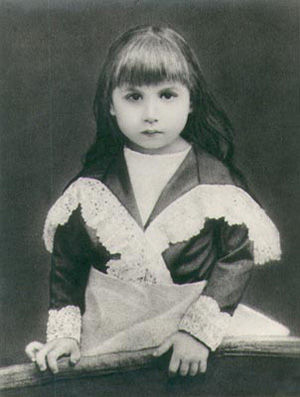
Mirra Alfassa (1878–1973), widely known as The Mother, was a spiritual leader, collaborator of Sri Aurobindo, and a central figure in Integral Yoga. Born in Paris on February 21, 1878, to a cosmopolitan family, she displayed deep spiritual and artistic inclinations from an early age. In her youth, she studied painting at the Académie Julian, explored occultism and philosophy, and later traveled to North Africa to study under advanced esoteric teachers.
In 1914, she traveled to Pondicherry, India, where she met Sri Aurobindo and instantly recognized him as the inner spiritual guide of her visions. After spending time in Japan, she returned permanently to Pondicherry in 1920. Following Sri Aurobindo’s retirement into seclusion in 1926, she took charge of guiding the growing spiritual community, which evolved into the Sri Aurobindo Ashram. Later in life, she established the Sri Aurobindo International Centre of Education (1952) and founded Auroville (1968), an international township dedicated to human unity, peace, and conscious evolution. She passed away in Pondicherry on November 17, 1973.

Art, Spirituality, and the Path of Conscious Creation
Exploring the blog topic of art through the lens of The Mother’s spiritual knowledge opens up a transformative perspective: art is not merely an aesthetic pastime or a mental expression, but a profound medium for spiritual awakening and material transformation.
1. How to Approach Art with Spiritual Knowledge
Moving Beyond the Mind: True creation, from this perspective, does not originate in the surface mental ego. The Mother noted that when creating or engaging deeply with inspired art (such as when she painted alongside Sri Aurobindo’s poetry), the ordinary noisy activity of the mind must fall completely silent. Approach art as an act of inner listening—a receptive state where the creator acts as a transparent channel for a higher consciousness, light, or truth.

Sincerity and Inner Truth: Artistic technique is important, but spiritual art demands absolute sincerity. This means expressing what is genuinely experienced from the psychic depths or soul, rather than mimicking styles for applause, validation, or commercial success.
Infusing Consciousness into Matter: For The Mother, spirituality is not about escaping the physical world, but about divinizing it. Approaching art spiritually means realizing that form, color, sound, and stone are part of the material world waiting to be awakened. Painting, writing, or sculpting becomes a sacred labor of infusing higher vibrations into physical matter.

2. Why Art Is Important
A Bridge to the Supramental: Art bridges the gap between the unmanifest divine realms and the physical plane. A truly inspired piece of art carries a subtle atmosphere that can uplift, awaken, and transform anyone who encounters it, quietting their lower vital struggles and stirring their inner aspiration.
An Instrument of Transformation: Because the ultimate goal of Integral Yoga is the transformation of earthly life down to the physical cells, art serves as a testing ground. It trains the human instrument—the hand, the eye, the emotions, and the concentration—to become more refined, flexible, and responsive to divine harmony. In short, art helps civilize and spiritualize the human reaction to the universe.

Chronology of Places Where She Lived
Mirra Alfassa’s physical journey spanned major cultural and spiritual hubs across Europe, Africa, and Asia:
Paris, France
1878–1905 (and various periods)
Born at boulevard Haussmann in Paris. She spent her childhood and youth here, studying art at the Académie Julian, painting, playing piano, and hosting early philosophical and spiritual circles like the Idéa group.
Tlemcen, Algeria
1905–1906
Traveled to North Africa to study advanced occultism and esoteric philosophy under the spiritual adepts Max Théon and Alma Théon.
Paris & Environs, France
1906–1914
Returned to France, where she continued her inner development, married Paul Richard, and engaged with various spiritual seekers, Sufi teachers, and thinkers in Paris.
Pondicherry, India (First Visit)
1914–1915
Traveled to French India for the first time, where she met Sri Aurobindo on March 29, 1914, recognizing him as her lifelong spiritual counterpart.
London, UK & Paris, France
1915–1916
Briefly returned to Europe during the disruptions of the First World War, staying in London and Paris.
Tokyo and Kyoto, Japan
1916–1920
Lived in Japan for four peaceful years, teaching French, painting, deeply observing Japanese culture, and refining her inner yoga amidst nature.
Pondicherry, India (Permanent Residence)
1920–1973
Returned to Pondicherry in April 1920 to settle permanently. She lived there for the rest of her life—guiding the Sri Aurobindo Ashram, overseeing the International Centre of Education, founding Auroville in 1968, and passing away there on November 17, 1973.
In the teachings of Mirra Alfassa (The Mother) and Sri Aurobindo, art, color, and beauty are not merely human ornaments or emotional outlets—they are powerful, living movements of the Divine Consciousness. Because Alfassa trained extensively as a painter at the Académie Julian in Paris before her spiritual journey took precedence, she possessed a deeply acute, technical, and mystical understanding of how visual form and color operate in the inner worlds.
1. The Significance of Color: The Language of Inner Forces
In the Integral Yoga framework, color is far more than a physical phenomenon of light wavelengths hitting the retina. To inner vision, color represents the direct vibration of spiritual and cosmic forces.
Colors as Living Powers: Alfassa and Sri Aurobindo frequently explained that the subtle worlds behind the physical universe are experienced as vast oceans of living light and dynamic color. Each color corresponds to a specific divine power, psychological quality, or cosmic plane:
White Light: The pure essence of the Divine Consciousness, containing all other powers harmoniously unified.
Gold/Golden Light: The vibration of the Supramental Truth-Consciousness and divine creation.
Blue: Often associated with the spiritual mind, peace, and deep protection.
Red: The dynamic force of life-energy, vital power, and physical action (which, when unpurified, can turn into passion or egoistic demand).
The Training of the Eye: Alfassa noted that a truly spiritualized eye does not just see a flat physical surface; it perceives the vibration of colors and forms. Training children and seekers to appreciate harmony, just arrangement, and color nuance helps purify the nervous system and refines the emotional being so it can better withstand higher spiritual descents without cracking or distorting.
2. Art as a Gateway to Spiritual Realities

Alfassa categorized human art into distinct tiers, noting that its true value depends entirely on the level of consciousness from which the artist draws:
The Lowest Use (Aesthetic): Art used purely for sensory pleasure, emotional titillation, or mental cleverness. While it has value in civilizing humanity out of raw savagery, it remains tied to the surface ego.
The Middle Use (Educative/Intellectual): Art that conveys ideas, moral narratives, or cultural history, expanding the human intellect.
The Highest Use (Spiritual): Art born from inner silence, where the creator acts as a transparent channel. In this state, the artist is gripped by an inspiration from higher planes—translating subtle truths, peace, or divine delight into physical lines and pigments.

3. Key Insights by The Mother on Art and Beauty
On the Artist’s Egotism vs. Sincerity: Alfassa and Sri Aurobindo noted that most traditional artists are bound up with the vital-physical ego—craving applause, fame, uniqueness, or commercial validation. True spiritual art requires abandoning this egoistic friction. The artist must approach their canvas like a "blank page," silently waiting for a higher truth to manifest without personal mental clamor.
On the Purpose of Beauty: Alfassa viewed beauty not as a luxury, but as the nearest earthly approach to the Divine. Surrounding oneself with harmony, clean lines, and pure colors is an active discipline. It elevates the collective subconscious, calms the vital turbulence of the mind, and prepares the physical body to tolerate higher spiritual frequencies.
The way she bridged a rigorous European artistic training with a profound mystical worldview is truly unique. She viewed every brushstroke, color choice, and architectural line not as a static end in itself, but as part of a grander alchemy—an ongoing effort to infuse divine harmony into material form.
This same vision guided her monumental final creation: Auroville, the international township she founded in 1968. She didn't just plan a city; she designed it as a living, three-dimensional mandala. The master plan was laid out as a spiral galaxy, where different zones (International, Cultural, Industrial, Residential) corresponded to specific psychological functions, colors, and evolutionary aspirations, all revolving around the Matrimandir—the golden globe at the center dedicated to the realization of human unity.
Primary Compilations (Words of The Mother on Art)
Paintings and Drawings by the Mother (Sri Aurobindo Ashram Publication Department)
The Collected Works of the Mother (CWM) – Specifically Volume 3 (Questions and Answers 1929–1931) and Volume 12 (On Education)
Sri Aurobindo’s Direct Guidance on Art (In Dialogue with Her Vision)
Sri Aurobindo, Letters on Yoga (Section: "Art, Beauty, and Creation")
Analytical and Journalistic Studies
Selected Essays from The Renaissance (Published by the Sri Aurobindo Society / SABDA)
Photos from the mother https://en.wikipedia.org/wiki/Mirra_Alfassa


Comments